



















Agentic Execution of Manual and Gherkin Tests: Questions to Ask Before You Start
AI Lynqa
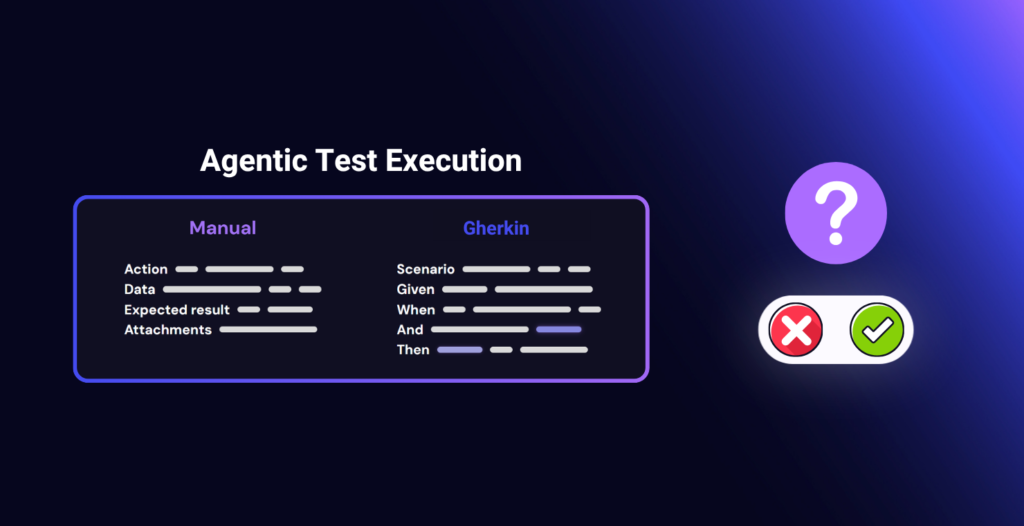
Test execution remains a pain point for many QA teams. Manual test cycles take up a lot of time. Automated scripts work well for stable, frequently run scenarios, but they require technical skills, development time, and ongoing maintenance, even with AI assistance.
Lynqa performs agentic execution of your manual tests and Gherkin scenarios. It interprets the test intent, observes the application, and adapts its actions like a manual tester. A manual test cycle planned over two days with two QA testers can be completed in two hours through parallelized agentic execution, including verification.
Which tests can you hand over to Lynqa, under what conditions, and for what benefit? This article covers those topics.
Agentic test execution relies on AI models’ computer-use capabilities. The agent uses the application with a virtual mouse and keyboard. It reads the test, observes the screen, chooses its actions, and checks the result. Like a manual tester, Lynqa executes the test scenario based on the application’s actual state.
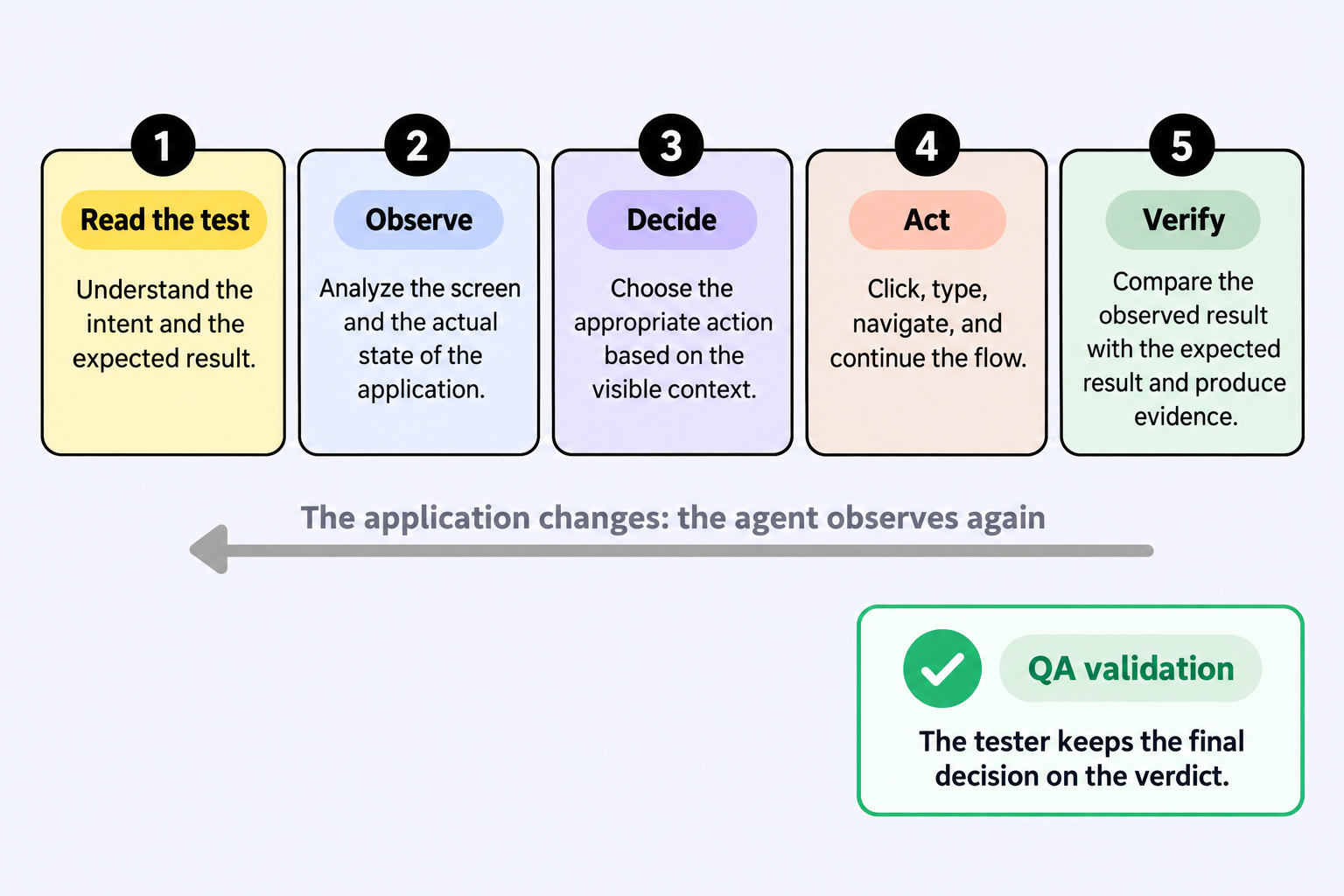
Figure 1 – The agentic loop when executing a manual or Gherkin test
Before starting agentic test execution, examine three topics: applicability to your context, reliability and data security, and expected benefits.
Part 1. Applicability: Is it right for your context?
Which tests can you hand over to Lynqa?
Agentic execution applies to functional UI tests. It can handle manual tests written in natural language, Gherkin/Cucumber scenarios, and tests based on the acceptance criteria of a user story.
It is particularly relevant for:
- functional acceptance tests and sprint validation tests, as well as user story tests;
- features that are still evolving;
- manual test cycles subject to workload peaks.
The level of detail in how a test is written can vary; Lynqa will interpret it and follow your test instructions. A manual QA tester understands the objective, finds the right path, and checks the expected result. Lynqa follows the same logic. It can interpret a high-level instruction and build the path needed to execute it.
Since its release in late 2025, Lynqa has executed thousands of test cases across a wide range of web applications, demonstrating its ability to adapt to varied writing styles and to applications that differ greatly from one another.
Agentic execution is well suited to in-sprint manual testing
A functionally stable environment is not a prerequisite. Agentic execution adapts when the application and its user interface change.
During agentic execution, Lynqa observes the user interface. It can find a “Submit” button or an “Address” field based on its role in the flow, even if its position or implementation has changed.
Agentic execution can be run from your test management tool or triggered via API
With Lynqa, you can run agentic execution directly from your test management tool or trigger it from an AI-powered QA toolchain via the Lynqa API.
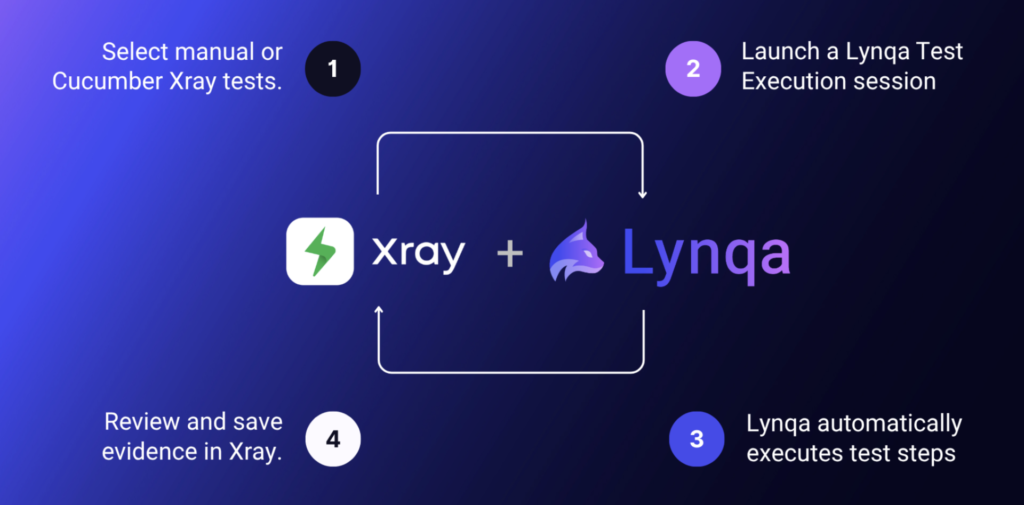
Lynqa is already natively integrated with Jira Cloud / Xray, Xqual, and SquashTM.
The Lynqa API enables you to integrate agentic execution into AI-powered QA toolchains, which often include user story refinement and test generation. Lynqa is very well suited to the agentic execution of AI-generated tests.
Agentic execution and scripted automation are complementary
Agentic execution suits evolving flows, functional tests written in natural language, and the need for immediate validation during the sprint. Scripts remain the right choice for stabilized regression scenarios on stable applications that are run very frequently in a CI/CD pipeline.
The two approaches can follow one another. A team can execute a new test with Lynqa as early as the sprint in which it is created. Once the flow stabilizes, the team can select the scenarios that justify long-term scripted automation.
Part 2. Reliability and security: can you rely on it?
Very high reliability, measured across numerous test executions
A test agent must respect the scenario’s intent, check the expected results, and produce a correct verdict.
Smartesting evaluates Lynqa using the Lynqa Assessment Framework, established in 2024, to measure the agent’s reliability. Current benchmarks show a success rate above 92%, measured as “true accuracy”: the verdict is correct for the test and each step, exactly as the QA tester expects. The full Lynqa assessment dataset includes 1,247 scenarios and 215 websites.
The assessment does not focus solely on the final status. It analyzes the step-level verdict, repeatability on an unchanged application, defect detection, and twelve action categories. These include navigation, forms, attachments, data manipulation, logic, and reasoning.
This level of performance makes agentic execution with Lynqa operationally viable. The pilot phase confirms integration into the QA team’s workflow and measures the actual benefits.
Results that are easy to verify
Trust also depends on how easily QA testers can check agentic execution. A simple PASS or FAIL status is not enough. With Lynqa, for each step, the tester will find:
- the action performed by the agent;
- what it observed in the application;
- the verdict produced;
- the associated explanation, especially in case of failure;
- the screenshots that support this verdict.
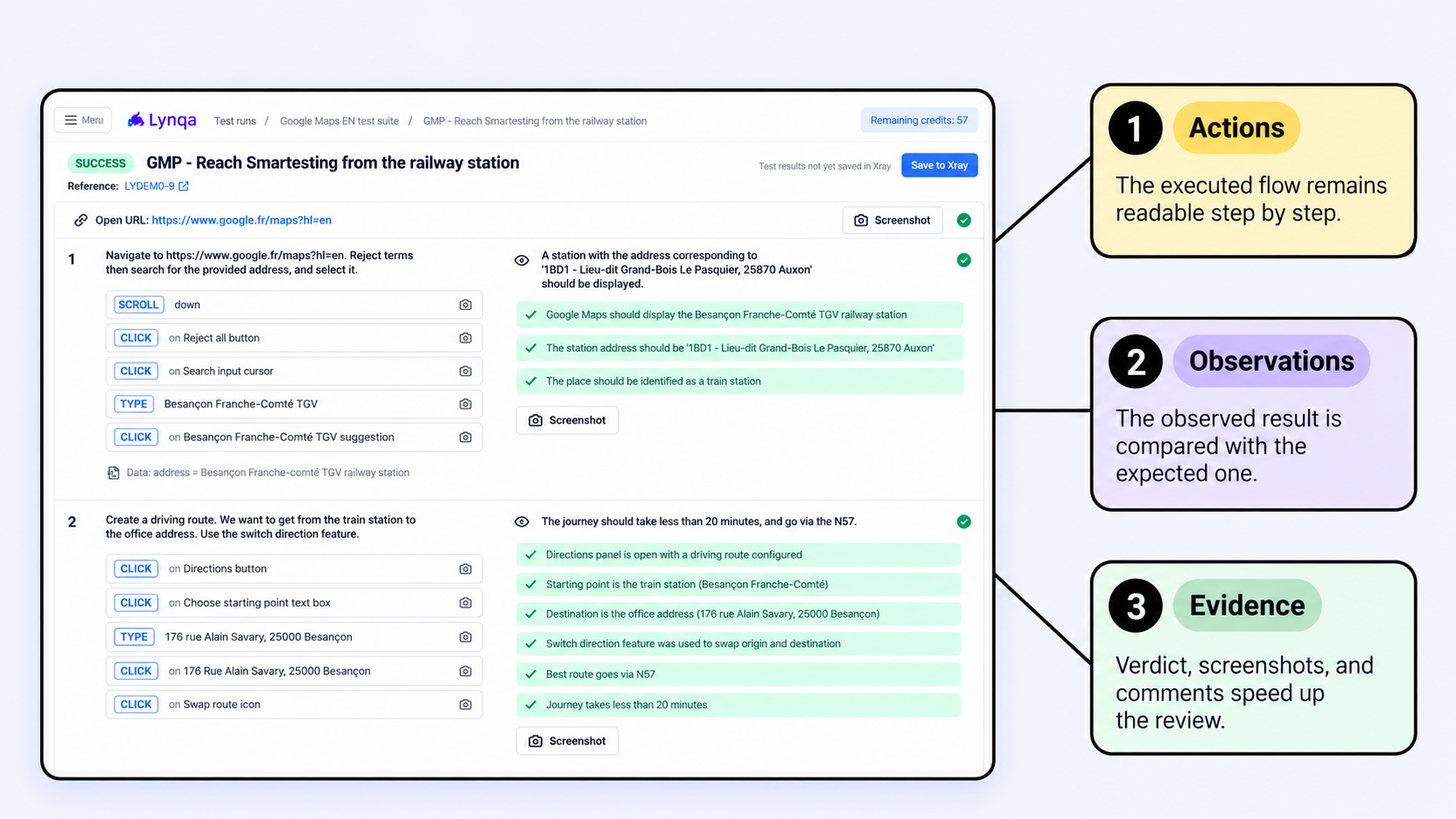
Figure 2 – The evidence provided by Lynqa makes agentic execution easy for the QA tester to verify
Verification is part of the process. The agent handles the actions and the evidence. The tester keeps the final judgment. This traceability has been a key factor in adoption: the QA tester makes the final decision on the test verdict.
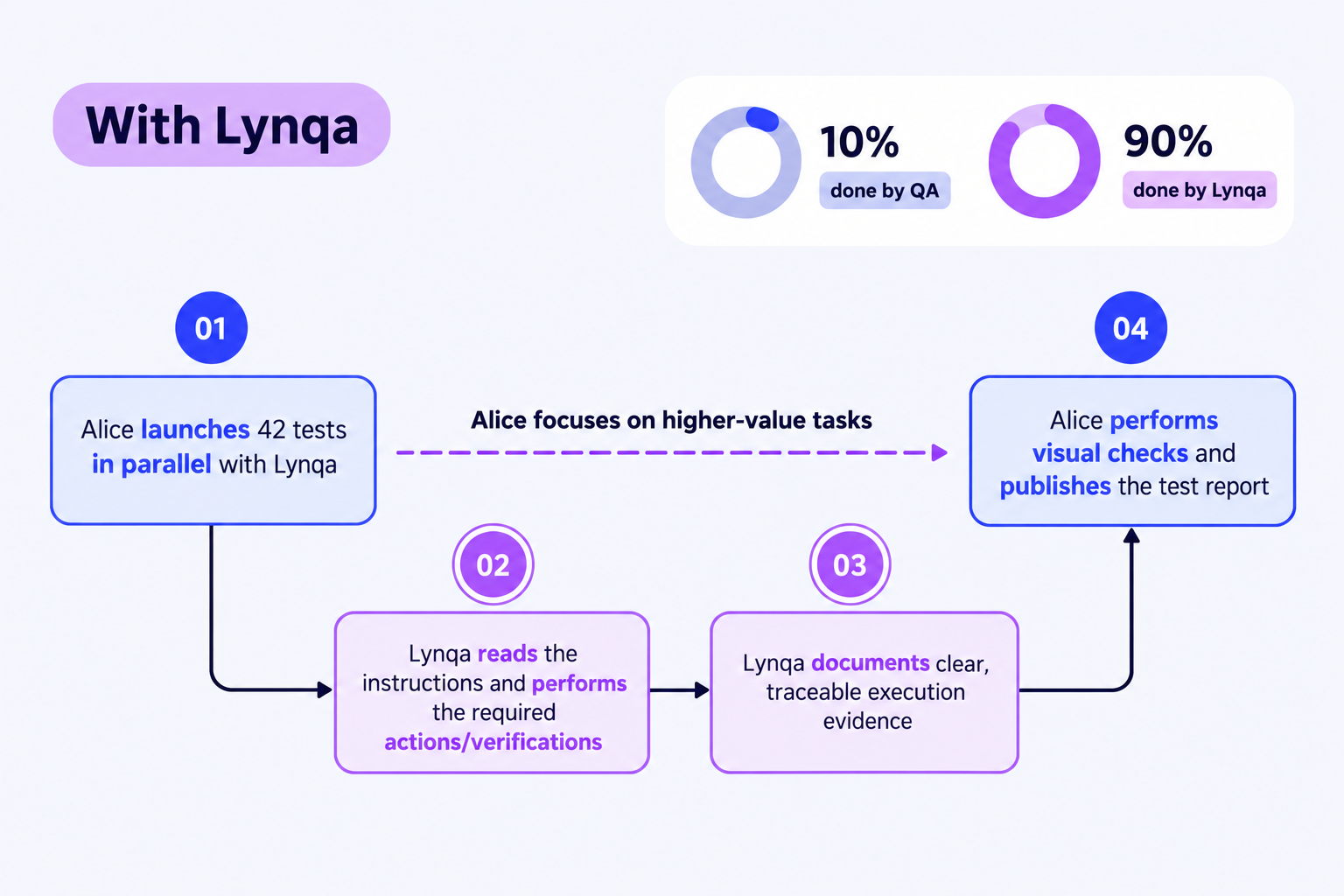
Figure 3 – Division of tasks in agentic execution: the human decides and verifies, and the agent executes.
Edge cases remain instructive. A misinterpretation may reveal an agent limitation. It may also highlight an ambiguous expected result, inconsistent data, or an implicit business rule. Agentic execution thus helps improve the test repository.
Security and compliance
The agent accesses the application in a test environment (never in production) and faithfully performs the specified test steps based on the information visible on the screen. Agentic execution is therefore a controlled and safe use case for AI agent technologies.
Smartesting has achieved SOC 2 Type II compliance for Lynqa Cloud. The independent audit reached a favorable conclusion on the design and operating effectiveness of the security controls and the report noted no exceptions in control testing.
The Lynqa Self-Managed edition allows on-premises deployment in the customer’s environment, using the customer’s own AI model.
For more details, see our article “Agentic Test Execution: What Security and Compliance Guarantees Should You Require?”.
Part 3. Expected benefits: what do you gain?
From two days to two hours for the manual test cycle
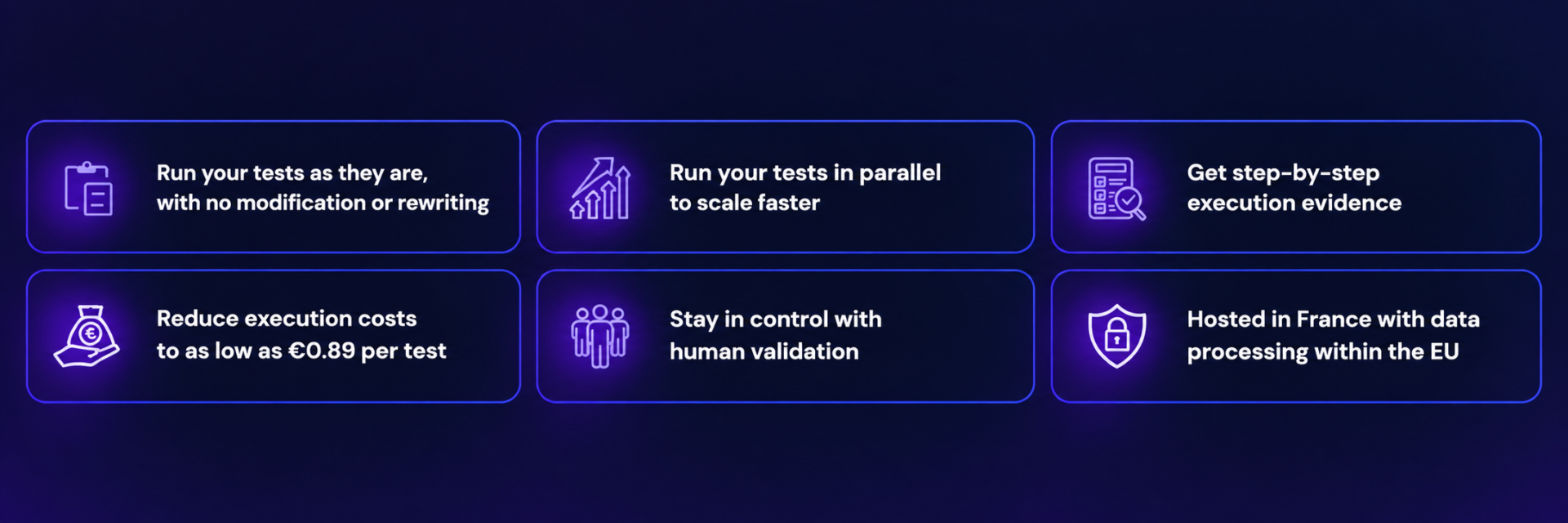
The first major benefit is a drastic reduction in execution cycles. Thanks to parallelization and the AI agent’s immediate availability, tests launch on demand. Teams can thus absorb workload peaks effortlessly and speed up critical validations before each release.
Figure 4 – Strong, immediate acceleration of manual test cycles
The benefits also come from sharply reduced costs. Agentic execution is automatic and requires no scripting, no coding, and none of the skills of a test automation engineer. Lynqa pricing starts at €0.89 per test, regardless of test complexity (detailed pricing at www.smartesting.com/en/lynqa/pricing).
Calculating the ROI of agentic execution in your context
The Lynqa ROI calculator, available online, uses the following parameters to determine the result in your context:
- manual time saved on the truly addressable scope;
- evidence review time;
- any re-executions;
- platform usage cost;
- setup and support costs.
Try it: https://roi.lynqa.smartesting.com/.
Three indicators are useful for measuring the benefits of an agentic execution pilot with Lynqa. The first is the number of hours saved per test cycle, including review, the second is the ability to detect the same defects as a comparable human execution and the third is how you use the freed-up time.
A decision checklist before starting your trials
Agentic execution is worth evaluating if your context meets several of these criteria:
- You have manual or Gherkin functional UI tests;
- You want to eliminate manual testing delays so they do not slow down delivery of the current increment;
- Some features or user interfaces change regularly;
- Writing or maintaining scripts is too costly for part of the scope;
- Tests express an intent and an expected result that a human tester can understand;
- The necessary test data can be provided to the agent;
- The team can organize a simple review of execution evidence.
Start with a representative set. Include common flows, a few edge cases, and end-to-end scenarios. Measure reliability, review time, and benefits over several cycles. You will then have what you need to determine the scope to hand over to the Lynqa agent.
You can try Lynqa right now in the Lynqa application
Stay tuned!
Agentic Test Execution: What Security and Compliance Guarantees Should You Require?
AI Tips
A test agent reads a scenario, logs in to an application, enters data, observes screens, and produces…
Read the article
Agentic AI Test Execution inside Jira with Xray and Lynqa
AI Lynqa
AI is transforming every stage of software testing, from requirement analysis to how teams design test cases,…
Read the article

AI and E2E/Regression Testing: How to Maintain Business Control?
AI Testing Yest
Designing good tests requires a strong understanding of the business. This is why QA teams, among all…
Read the article